Abstract:
Women’s lives are shaped by many different experiences, and our approach to leadership needs to recognise that diversity. This session looked at how lived experiences are shaped not only by gender, but by other factors such as age, culture, race, disability, sexuality, and social class as well as the impact of a potential reproductive journey and caregiving responsibilities.
These experiences shape women’s opportunities and the barriers they encounter. It’s a call to think more intersectionality, to notice where our own discomfort sits, and to build leadership pathways that include all women. It also offers a glimpse into where CEW is heading and what real progress will require from all of us.
Lisa Annese | Women Unlimited Speech | February, 2026
The great scholar, writer and feminist Audre Lorde once said: “There is no such thing as a single-issue struggle, because we do not live single-issue lives.”
Lorde was warning us against flattening women’s lives into a single story. Her theory of difference challenged the idea that gender alone can explain women’s experiences. The binary opposition between men and women, she argued, is far too simplistic.
Even when those of us advocating for gender equality have felt pressure to present a unified front, the category of “women” has always contained deep internal diversity: of race, class, age, sexuality, disability, culture, life stage and so on. These differences don’t sit neatly alongside gender. They shape how gender is experienced.
I’ve worked in the gender equality space for a long time: at what is now the Workplace Gender Equality Agency; in the private sector as a practitioner in equity and inclusion; for ten years as CEO of Diversity Council Australia; and since January 2025, as CEO of Chief Executive Women.
The women’s movement in Australia is powerful and sophisticated, and particularly in recent years, far more attentive to diversity. And yet I still hear well-meaning advocates say: let’s just focus on women first, and deal with other differences later. The problem with that logic is simple. There is no such thing as “women first” without deciding which women we mean.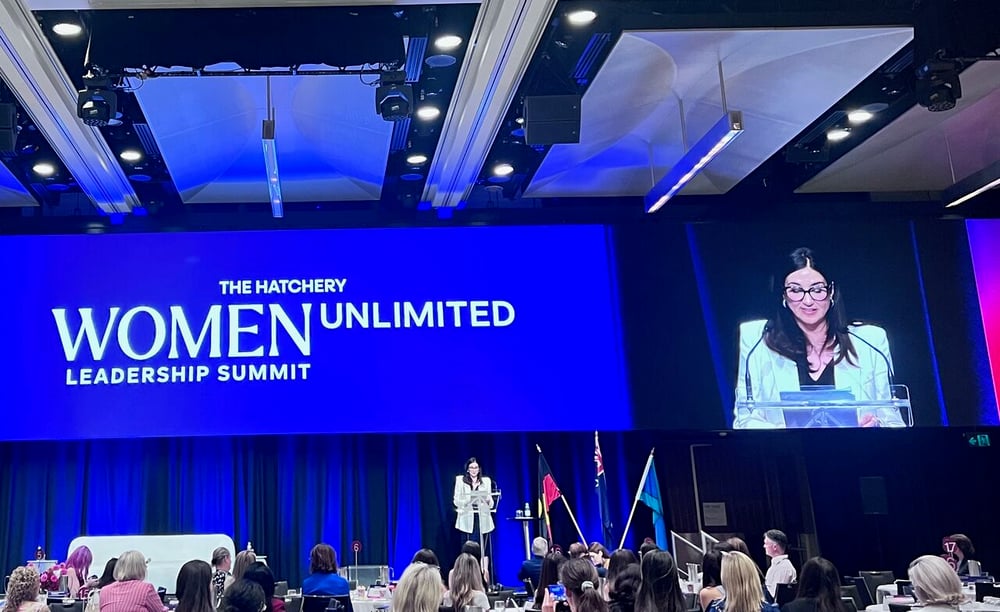
At Chief Executive Women, we are a community of more than 1,400 extraordinary members. Women at the top of their fields, many the first in boardrooms, executive teams, professions and institutions never designed with them in mind. Our purpose, "Women Leaders Empowering All Women", is deliberate. It captures both who our members are and what they stand for.
CEW members value the power of an exclusive peer network. But they are also deeply committed to developing the next generation of women leaders in all their diversity, and to dismantling the structural barriers shaping women’s lives, careers and choices. At the end of 2025, I spent four months travelling the country, consulting deeply with our membership. While many CEW members now hold significant economic and social privilege, they are far from homogenous.
Among our members:
- 1.9% are First Nations women.
- 10.5% live in rural and regional Australia.
- 8% are culturally and linguistically diverse, and further 6.8 per cent are culturally and racially marginalised or not white.
- 2.8% have disclosed a disability.
- 3.9% are part of the LGBTQ+ community.
And staggeringly, 79.5% of CEW members are carers. Carers of children. Carers of people with disability. Carers of aging parents. Often carers of more than one person at the same time. That figure is not incidental. It tells us something fundamental about women’s leadership in Australia. Because it exposes a quiet truth: the further you go up, for most leaders who are men, the more likely it is that care has been absorbed by someone else and rendered invisible.
If we ran the same consultation with male leaders at the very top of their professions, I am confident we would not see anything like that figure. Primary responsibility for care remains one of the sharpest fault lines in how leadership careers are built, and whose careers are interrupted.
As a mother of three who has built a career alongside primary caregiving, I know this viscerally. I remember being on a phone meeting with a senior woman executive who had just returned from parental leave. I could hear her baby crying. When I asked if she needed a break, she became emotional. Her return to work came with the unspoken expectation that nothing fundamental had changed.
My own return to work after my first child involved expressing breastmilk in secret in a storeroom. When it was discovered that I had stored that milk in the fridge, I was reprimanded.
You may have heard the saying: women are expected to parent like they don’t have careers, and work like they don’t have children. The only reason this rings true is because we designed a world of work that did not reflect the lived reality of many women.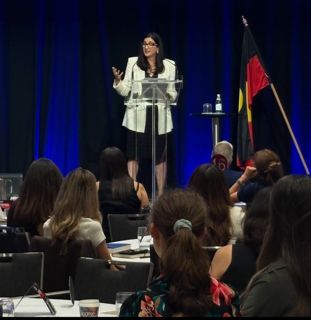
Audre Lorde understood this deeply. In the same way that caring shapes the experience of gender, she named race, class, age, sexuality, and later chronic illness and disability, as inseparable from her experience of being a woman. Gender mattered, but it never stood alone.
Today, we call this intersectionality, a term coined by the scholar, Kimberlé Crenshaw to describe how systems of power overlap and compound, particularly for those who sit at the intersections of multiple forms of marginalisation. Her work emerged from the lived realities of Black women whose experiences could not be understood through gender or race alone.
To understand the intersectional impact of caring responsibilities, consider how workplaces continue to frame care through narrow assumptions of the nuclear family. For many First Nations women, this framing is deeply problematic. Professor Aileen Moreton-Robinson has shown that power in Australia is organised through race, gender and class simultaneously, and that First Nations women are embedded in kinship systems carrying collective responsibilities far beyond Western models of care.
These obligations, to family, community, Country and cultural continuity, are profound strengths. But when systems ignore kinship-based care, they don’t simply overlook First Nations women. They structurally disadvantage them.
For many migrant and refugee women, research from Settlement Services International shows that caring does not stop at the Australian border. It extends across continents. Research shows these women often shoulder dual systems of care: visible care within Australia, and less visible but equally demanding transnational care obligations.
Intersectionality asks us to notice how systems are designed, and who they are designed for. Inequality is not accidental. It is produced through institutions that normalise some lives and marginalise others. Care gives us a way to see this clearly.
When we design leadership pathways that genuinely work for women with caring responsibilities, we almost always create better systems for many others as well. Mainstreamed flexible career paths, initially pioneered by women with caring responsibilities, don't just benefit those women - Everyone can benefit from flexibility in the workplace. People who have mental health issues or other obligations outside of work, or who are working across time zones, for example. Designing for carers forces us to confront time, flexibility, predictability, access to power, and how work is evaluated.
Those same design questions matter deeply for women with disability; for culturally and racially marginalised women navigating bias; for women managing chronic illness or reproductive health journeys; for women in regional areas; and for anyone whose career has been non-linear because life has been non-linear.
As Christine Lagarde has said, “Gender equality is not only a moral imperative, it is an economic necessity.” But it is also a design challenge.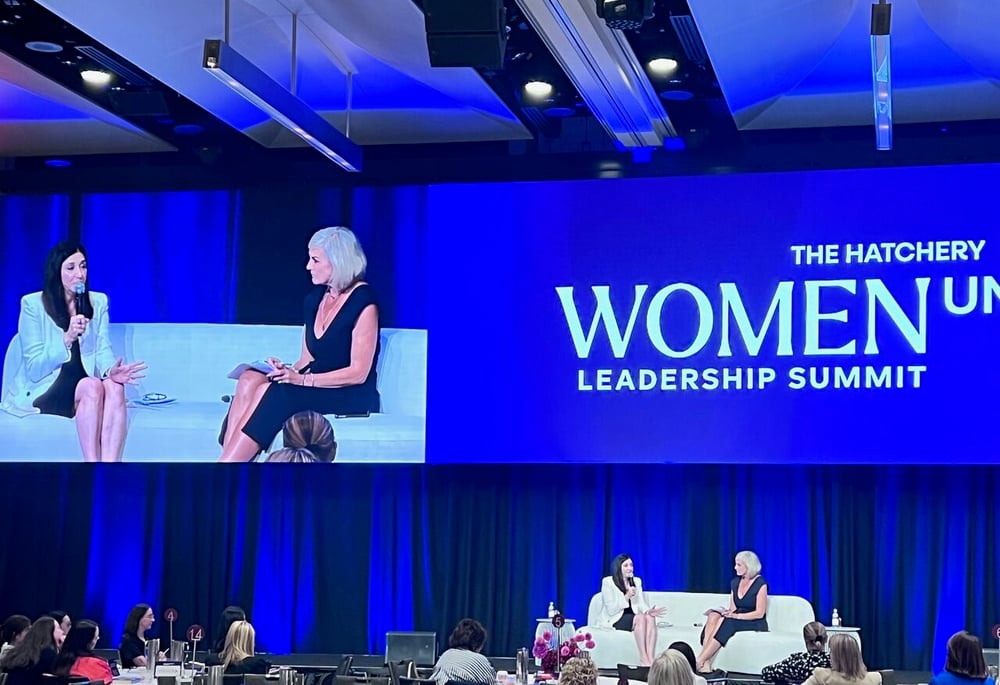
Progress remains slow and fragile. The 2025 CEW Senior Executive Census, then in its ninth year, showed women hold just 10% of CEO roles and only 31% of executive leadership positions across the ASX 300. Progress continues at around one percentage point a year, and the majority of CEO “pipeline” roles remain held by men.
Care sits at the centre of this story, yes. But it is not the only factor. Inequality in leadership is compounded by multiple intersecting barriers. Systems in workplaces and the labour market are designed around norms that advantage some groups and disadvantage others. Women from culturally and linguistically diverse backgrounds have lower workforce participation and face additional barriers to secure, well-paid roles. Women with disability encounter insecure work and reduced flexibility. Women in regional areas face geographic disadvantage. These challenges compound.
Research from ANU’s Global Institute for Women’s Leadership, WGEA and Jobs and Skills Australia shows that women’s daily experiences of work are shaped by systems that fail to account for their lives: stigma around reproductive health and menopause; unsafe workplaces; and a persistent broken rung into pipeline roles, particularly for women of colour and women with disability.
And now we face a new frontier. Artificial intelligence, if left unchecked, risks hard coding these biases into hiring, promotion, and performance decisions. Technology will either accelerate inequality or help dismantle it, entirely depending on how intentionally we design it. Intersectionality is not an academic concept. It is a practical lens for understanding how inequality accumulates, and how we must design leadership systems that truly work for everyone. So, what does real progress require?
First Nations women have been clear about what happens when systems are designed without their voices. Professor Megan Davis reminds us that “when laws and policies are made about us, without us, they fail.” Intersectionality demands we take this seriously, not as consultation theatre, but as co-design. Designing for women with caring responsibilities gives us the blueprint. Care is not a niche issue. It is a structural fault line.
The International Labour Organisation estimates 708 million women globally are excluded from the labour force because of unpaid care responsibilities, compared with just 40 million men. In Australia, women’s participation, progression and pay fracture around care. The gender pay gap remains stubborn, 11-12% on full-time earnings and closer to 20% on total remuneration, despite women being among the most educated cohorts in the country.
When we build roles that assume uninterrupted availability, linear careers and geographic mobility, we are not rewarding merit. We are rewarding a particular life pattern. But when organisations redesign work so carers can progress without penalty, the benefits ripple outward, for people with disability; for those managing chronic illness or reproductive health journeys; for culturally and racially marginalised women navigating bias; and for anyone whose life does not conform to a narrow ideal. When we centre these realities, we are forced to redesign work itself, how roles are structured, how performance is measured, how careers advance, and how leadership potential is recognised. That same centred, participatory approach must guide how we design for race, disability, class, culture, sexuality and health.
The next era of women’s leadership will not be built by another statement of intent.
It will be built by those of us working in this space: practitioners, policymakers, employers, leaders and advocates, who refuse single stories. Who centre lived experience in design. And who understand that when we design systems that work for women at the margins, we do not dilute excellence. We redefine it.
Thank you
• Chief Executive Women (CEW) – Senior Executive Census 2025; research hub and news on accountability and accelerators.
• Workplace Gender Equality Agency (WGEA) – Australia’s Gender Equality Scorecard 2024–25; ABS pay gap explainer and national statistics.
• Australian Bureau of Statistics (ABS) – Gender Indicators (latest pay gap measures).abs
• World Economic Forum – Global Gender Gap Report 2024; Australian ranking
• International Labour Organization (ILO) – Care at Work (2022); Statistical Brief on care responsibilities (2024).
• OECD – Gender equality and work: pay gap, parental leave, childcare and policy levers
• KPMG / WGEA / DCA – She’s Price(d)less: The economics of the gender pay
• Deloitte – Women @ Work 2024: A Global Outlook
• UNESCO – Reports on gender bias in generative AI and ethical AI governance.
• ANU/GIWL 2024: Gender inequality in the workplace: using the evidence to advance change.
• Jobs and Skills Australia 2025: New Perspectives on Old Problems – Gendered Jobs, Work and Pay.
• SSI: Unlocking Potential, Addressing the Economic Participation of migrant women.
Media Contact:
Mayank Gurnani
E: mgurnani@cew.org.au
M: +61414463827
About Chief Executive Women
Since 1985, Chief Executive Women (CEW) has influenced and engaged all levels of Australian business and government to remove the barriers to women's progression and ensure equal opportunity for prosperity. CEW's 1,400 members represent Australia's most senior and distinguished leaders across the country's largest private and public organisations, collectively overseeing over 1.3 million employees and $749 billion in revenue.
From the blog